Genomic Regulators of Lipid Metabolism and Longevity in C. elegans
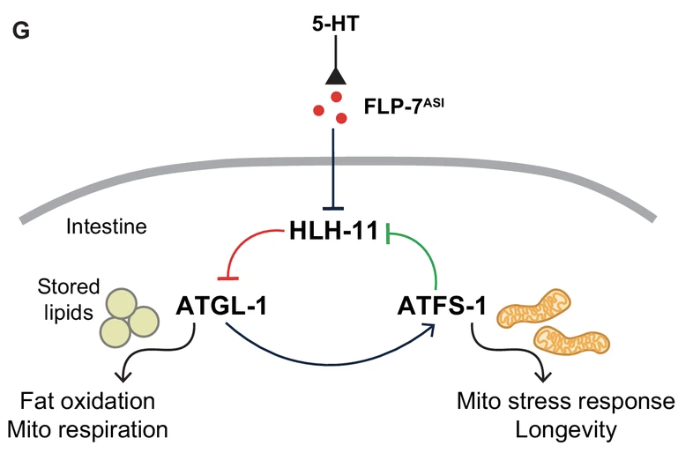 Photo courtesy of Srinivasan Lab, from this paper
Summer 2023 — Srinivasan Lab, The Scripps Research Institute
Abstract
At the Srinivasan Lab, I investigated the HLH-11 feedback loop in C. elegans, which bridges fat oxidation with mitochondrial stress responses and lifespan regulation. HLH-11 is a highly conserved transcription factor known to coordinate lipid metabolism, mitochondrial stress responses, and longevity. Dissecting this feedback loop offers insights into how these physiological processes interact to influence health and aging.
My project comprised four main components:
- Tissue-specific rescue constructs: Cloned hlh-11 rescue constructs using Gibson Assembly to dissect the tissue-specific roles of HLH-11.
- Global hlh-11 knockout by CRISPR: Deleted the full 3,387 bp hlh-11 locus to observe phenotypic consequences of complete loss of function.
- Fluorescent reporter crosses: Crossed hlh-11 mutants with Phlh-11::hlh-11 GFP strains to visualize expression and tissue-specific localization.
- Lifespan assays: Assessed how HLH-11 manipulation affects organismal longevity in collaboration with another lab member.
Because HLH-11 and its downstream pathways are conserved across species, these findings may have broader implications for understanding metabolic and age-related diseases in humans, and could inform future therapeutic strategies targeting the lipid metabolism–longevity axis.
Fuminori Tanizawa
PhD Student
PhD Student in Computational and Systems Immunology at Stanford Medicine, studying malaria immunity