- Behavior
- Evolution
Behavioral Effects of Odorant Injection on Larvae and Eggs of Bicyclus anynana
Monteiro Lab · National University of Singapore · Singapore · May 2022 – Aug 2022
Amgen Asia Scholar · Dr. Antónia Monteiro, Department of Biological Sciences
Question
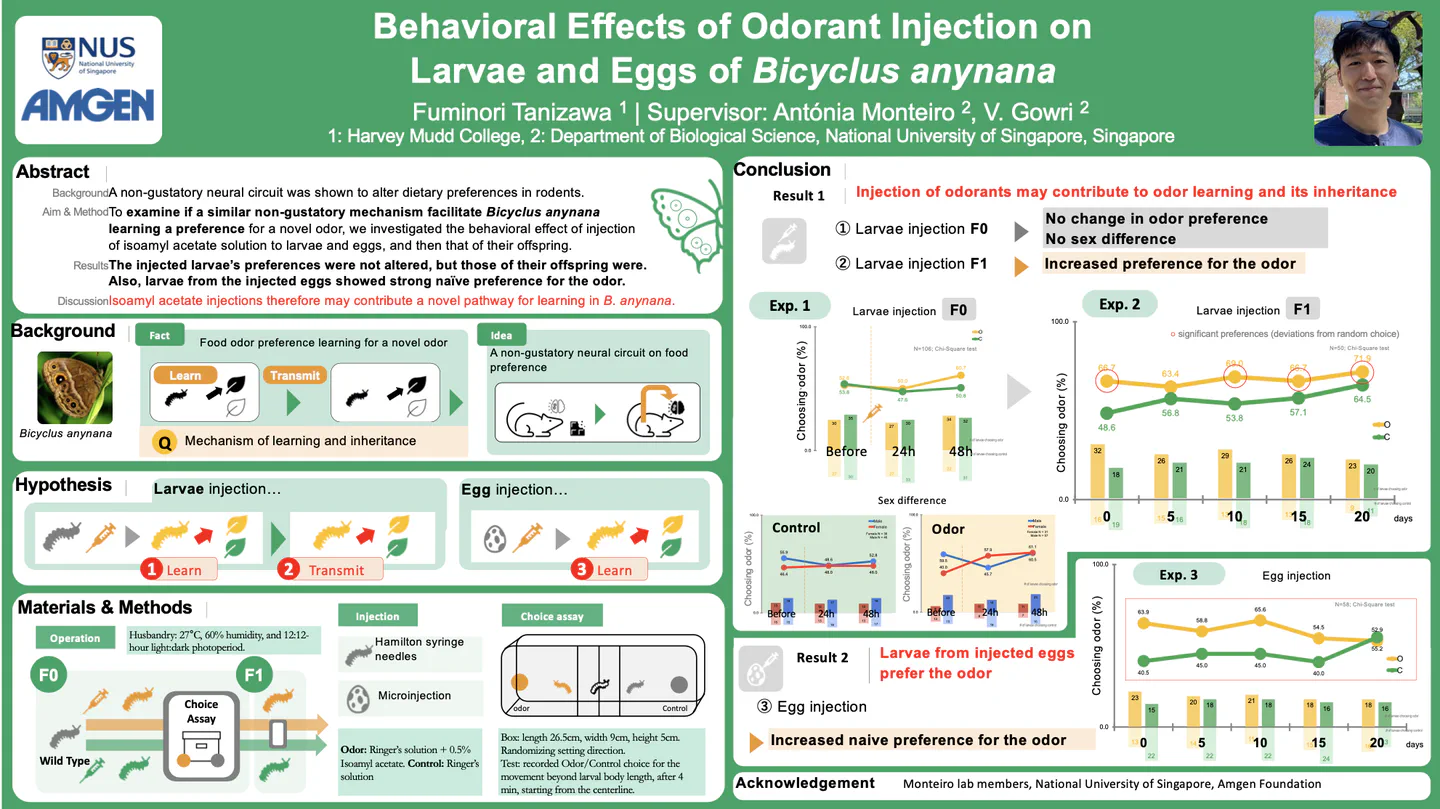
Can butterfly larvae learn to like a new food odor — and pass that preference on to their offspring?
What I did
- Designed and ran odor-injection and odor-choice experiments on eggs and larvae
What I found
Larvae acquired new host-plant odor preferences and transmitted them to the next generation — evidence for the inheritance of a learned behavior.
Methods Behavioral assays · Odorant injection
Organism Bicyclus anynana
Recognition Amgen Scholar (4% acceptance) · co-hosted the Amgen Scholars Asia Symposium
Background
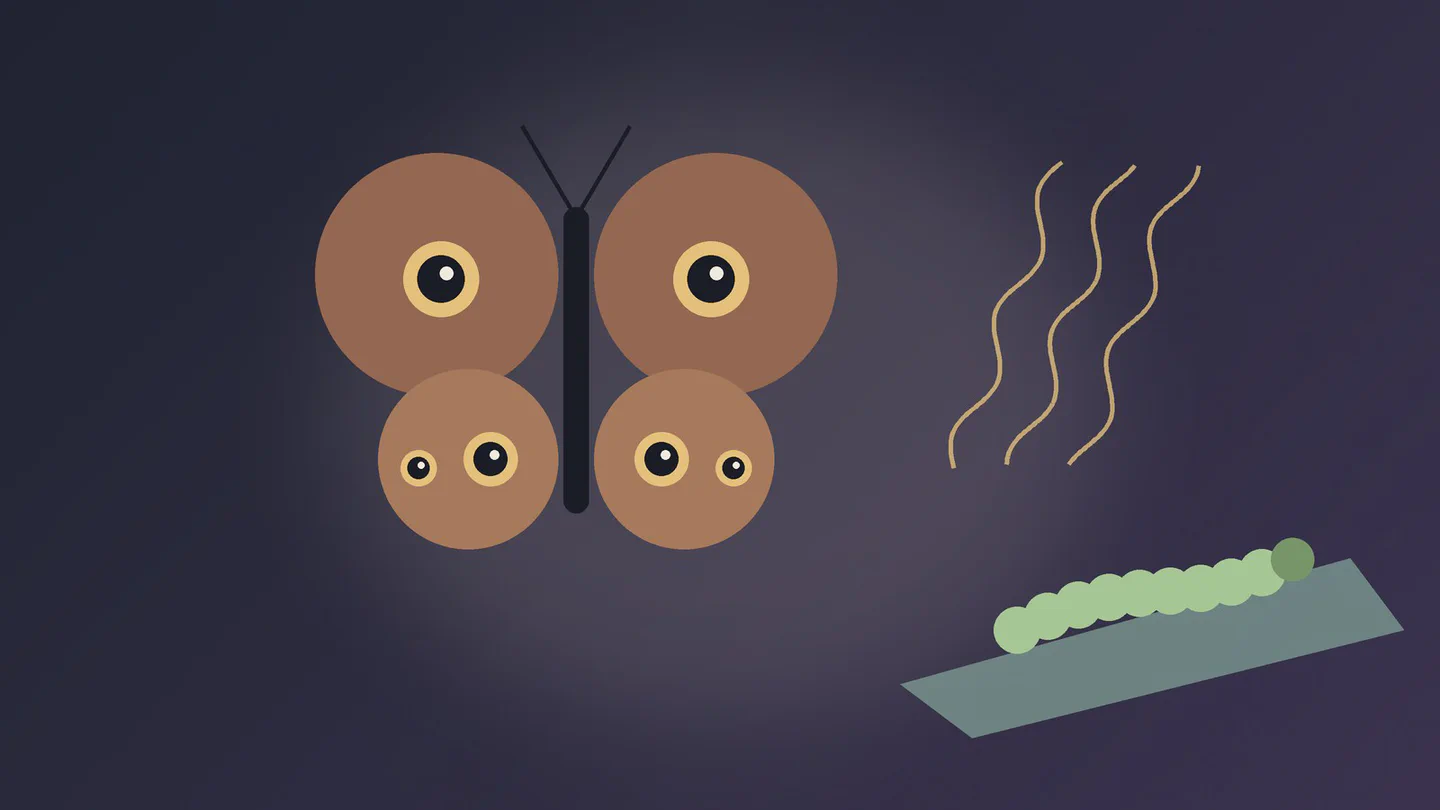
Insects often prefer the plants they grew up on. If such learned preferences can be inherited, they could help populations shift to new host plants — a possible route to ecological speciation.
What I did
In the African butterfly Bicyclus anynana, I injected odorants into eggs and larvae and tested the odor preferences of larvae and their offspring in choice assays.
What I found
Larvae acquired preferences for new host-plant odors and passed them to the next generation, adding evidence that learned behaviors can be inherited and may contribute to host-plant adaptation. I also co-hosted the Amgen Scholars Asia Symposium, with speakers from four universities in three countries.
Click to open the PDF.
From this project
Transgenerational Inheritance of Learned Odor Preferences in Bicyclus anynana
2022 Amgen Scholars Asia Symposium, Singapore, August 2022.