- Immunology
- Parasitology
Characterizing the Effect of the Extravascular Environment on Trypanosoma brucei Antigenic Diversity
Mugnier Lab · Johns Hopkins University · Baltimore, MD, USA · May 2024 – Aug 2024
Summer Undergraduate Research Fellow · Dr. Monica Mugnier, Department of Molecular Microbiology and Immunology
Question
What is the environment outside the bloodstream like for trypanosomes — and could it drive the diversity of their surface coat?
What I did
- Developed a method to collect extracellular fluid from infected mouse organs (heart, lung, fat)
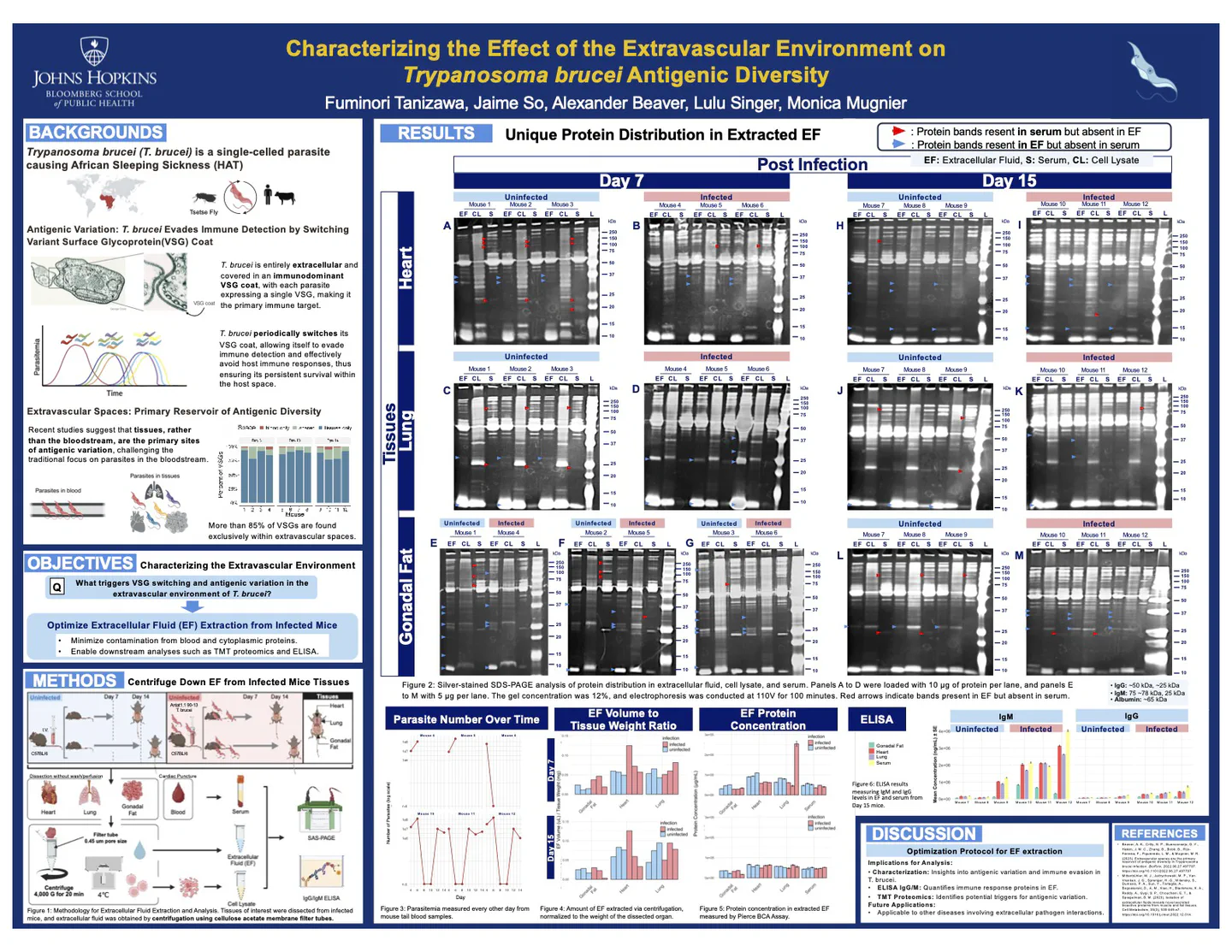
- Measured its proteins and antibodies with SDS-PAGE and ELISA
What I found
The fluid had a protein profile distinct from blood and lower IgG/IgM levels — weaker immune pressure that may allow antigenic diversity to build up.
Methods Mouse perfusion & dissection · SDS-PAGE · ELISA
Organism Trypanosoma brucei · mouse
Recognition BSI-SIP Fellowship · poster at the C.A.R.E.S. Symposium
Background
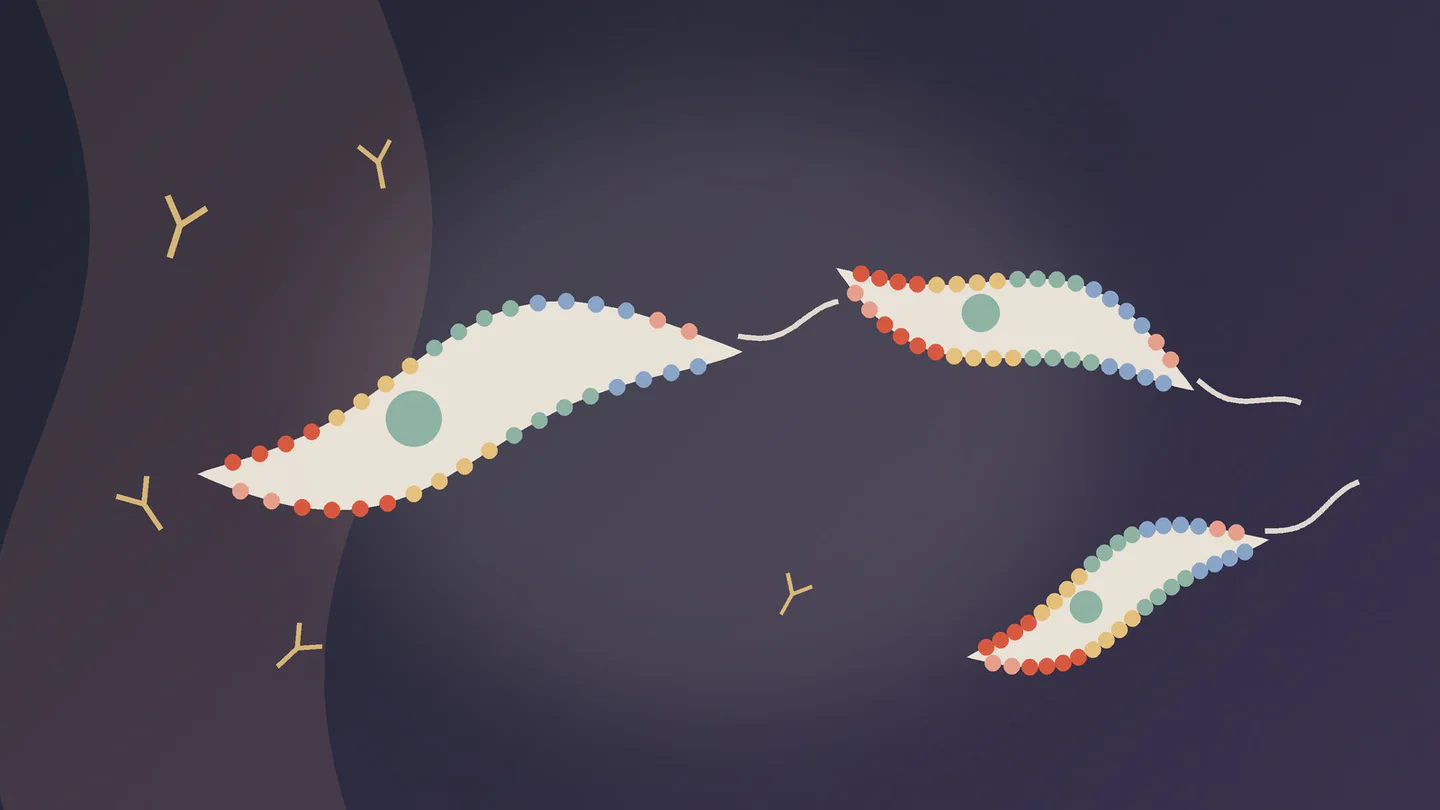
Trypanosoma brucei, the parasite behind African sleeping sickness, escapes antibodies by repeatedly switching its dense surface coat (variant surface glycoprotein, VSG). Recent work suggests that much of this diversity arises not in the blood but in the fluid-filled spaces between tissue cells — yet little is known about that environment.
What I did
I developed and optimized a protocol for extracting extracellular fluid from the heart, lungs and fat of infected mice, testing perfusion, centrifugation and washing steps to maximize yield while avoiding contamination from damaged cells. I then analyzed the fluid by SDS-PAGE and ELISA.
What I found
The extracellular fluid had a protein profile distinct from both cell lysate and serum, and lower IgG/IgM antibody levels — suggesting reduced immune pressure outside the bloodstream. The protocol gives the lab a reproducible way to study these spaces in future work on immune evasion.
Click to open the PDF.
From this project
Characterizing the Effect of the Extravascular Environment on Trypanosoma brucei Antigenic Diversity
Johns Hopkins Career, Academic, and Research Experiences for Students (C.A.R.E.S.) Symposium, Baltimore, MD, July 2024.