- Parasitology
- Gene regulation
HAT Complex Protein EAF6: Role in Lifecycle Differentiation of Trypanosoma brucei
Schulz Lab · Harvey Mudd College · Claremont, CA, USA · Sep 2023 – May 2024
Undergraduate Researcher · Dr. Danae Schulz, Department of Biology
Question
Is the chromatin protein EAF6 needed for trypanosomes to switch between their bloodstream and insect life-cycle stages?
What I did
- Designed and cloned an inducible RNAi construct against EAF6
- Tracked differentiation over three days with an EP1-GFP reporter and flow cytometry
What I found
Knockdown and control cells differentiated at similar rates, pointing to limitations of the RNAi clone; I contributed to the lab’s related study published in mSphere (2026).
Methods Inducible RNAi · Cloning · Flow cytometry
Organism Trypanosoma brucei
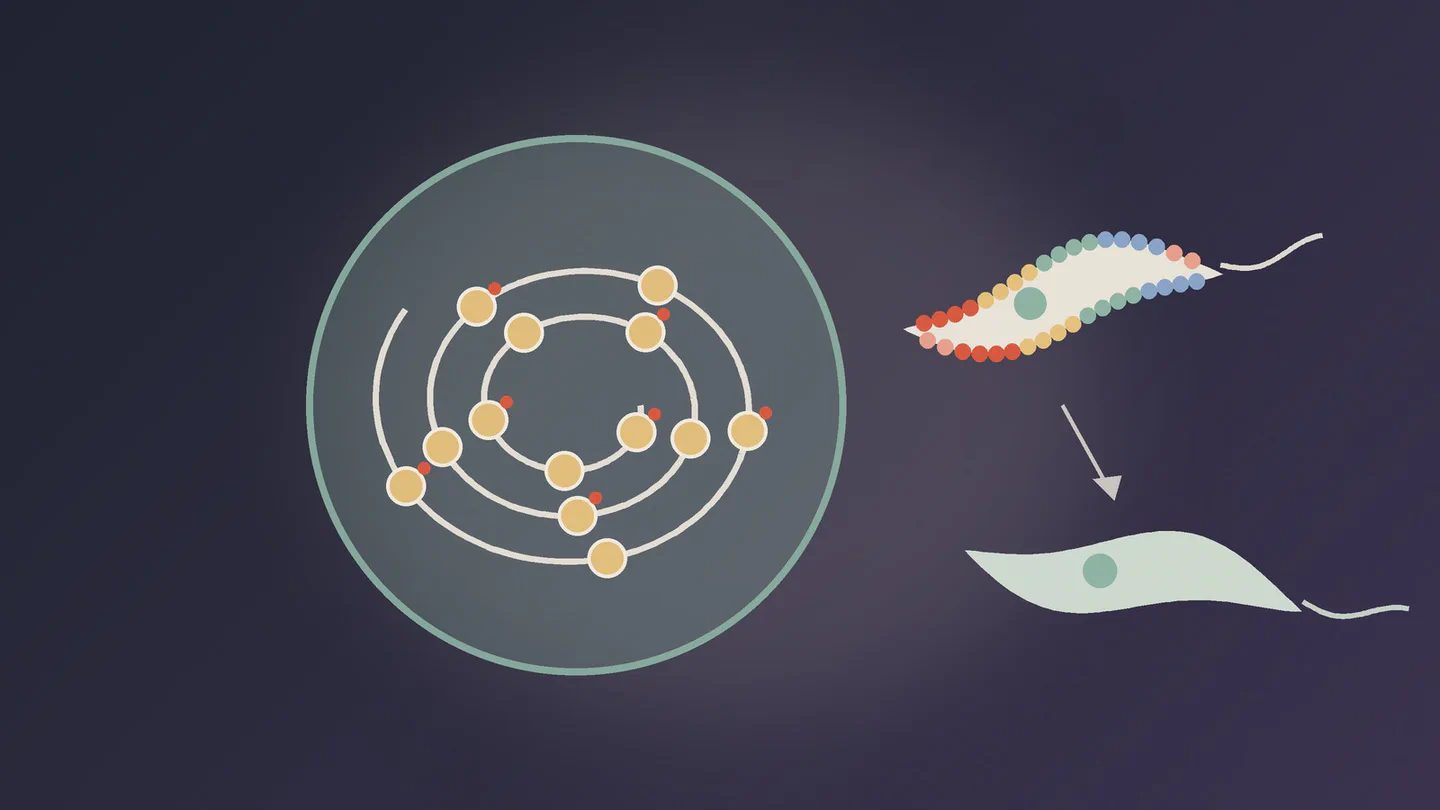
Background
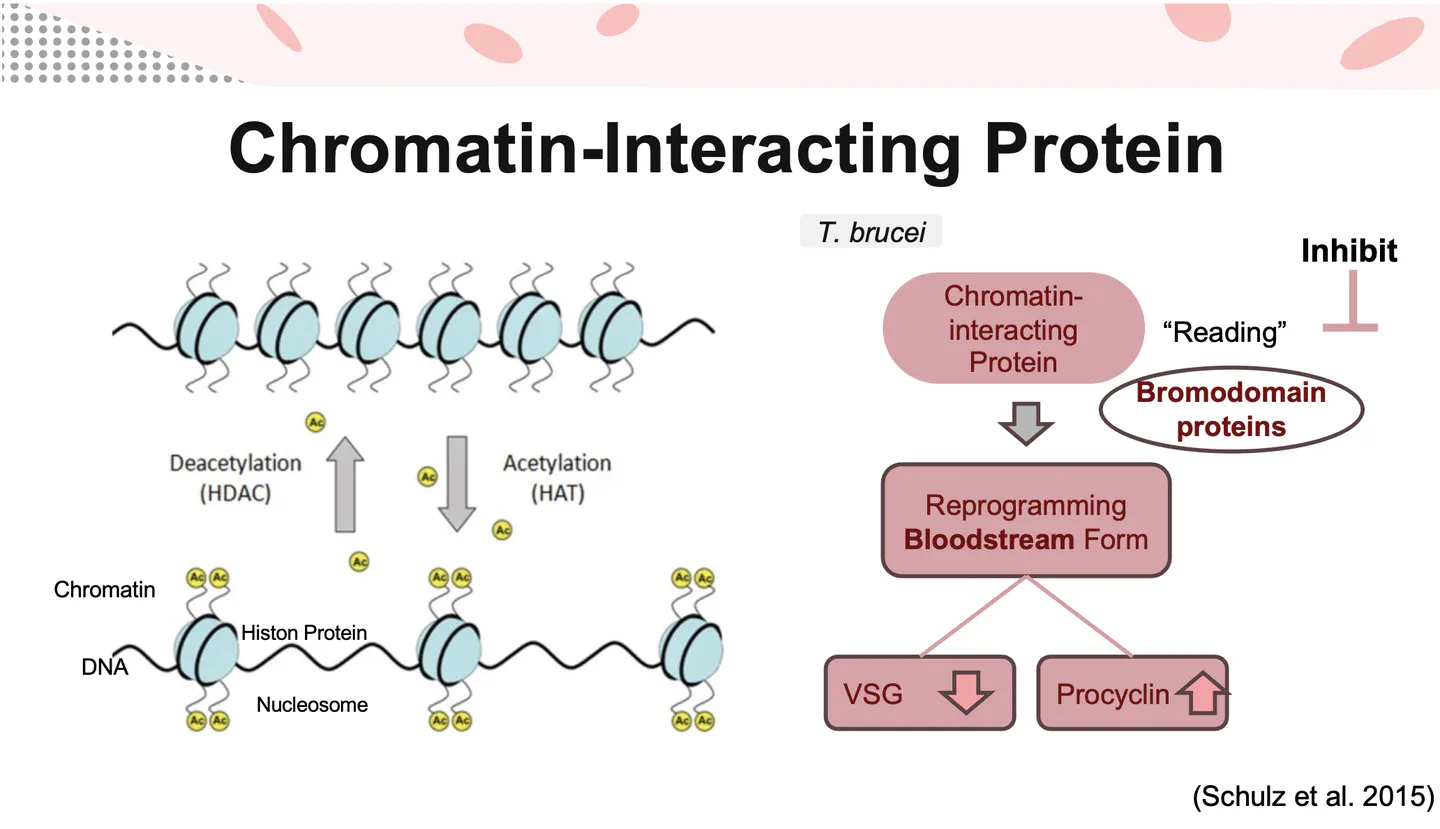
In the bloodstream, T. brucei hides behind a variable surface coat (VSG); in the tsetse fly it switches to a different coat protein, procyclin. How chromatin proteins control this developmental switch is still being worked out.
What I did
I studied EAF6, a non-catalytic subunit of a histone acetyltransferase (HAT) complex. I built RNAi vectors to knock EAF6 down, introduced them into parasites carrying an EP1-GFP reporter, and followed differentiation for three days by flow cytometry, troubleshooting leakage of the RNAi system along the way.
What I found
Knockdown cells (+Dox) did not differentiate differently from controls (−Dox), though both were slower than wild-type parasites — suggesting a problem with the RNAi clone rather than a true null result. Next steps were independent clones, Western-blot confirmation of knockdown, and related HAT-complex proteins. The lab’s broader work on bromodomain proteins was published in mSphere (2026), with me as a co-author.
Click to open the PDF.