- Immunology
- Aging
Mitochondrial Protein Degradation and Immune Response in Drosophila melanogaster
Hur Lab · Harvey Mudd College · Claremont, CA, USA · Aug 2024 – May 2025
Senior Thesis Student · Dr. Jae Hur, Department of Biology
Question
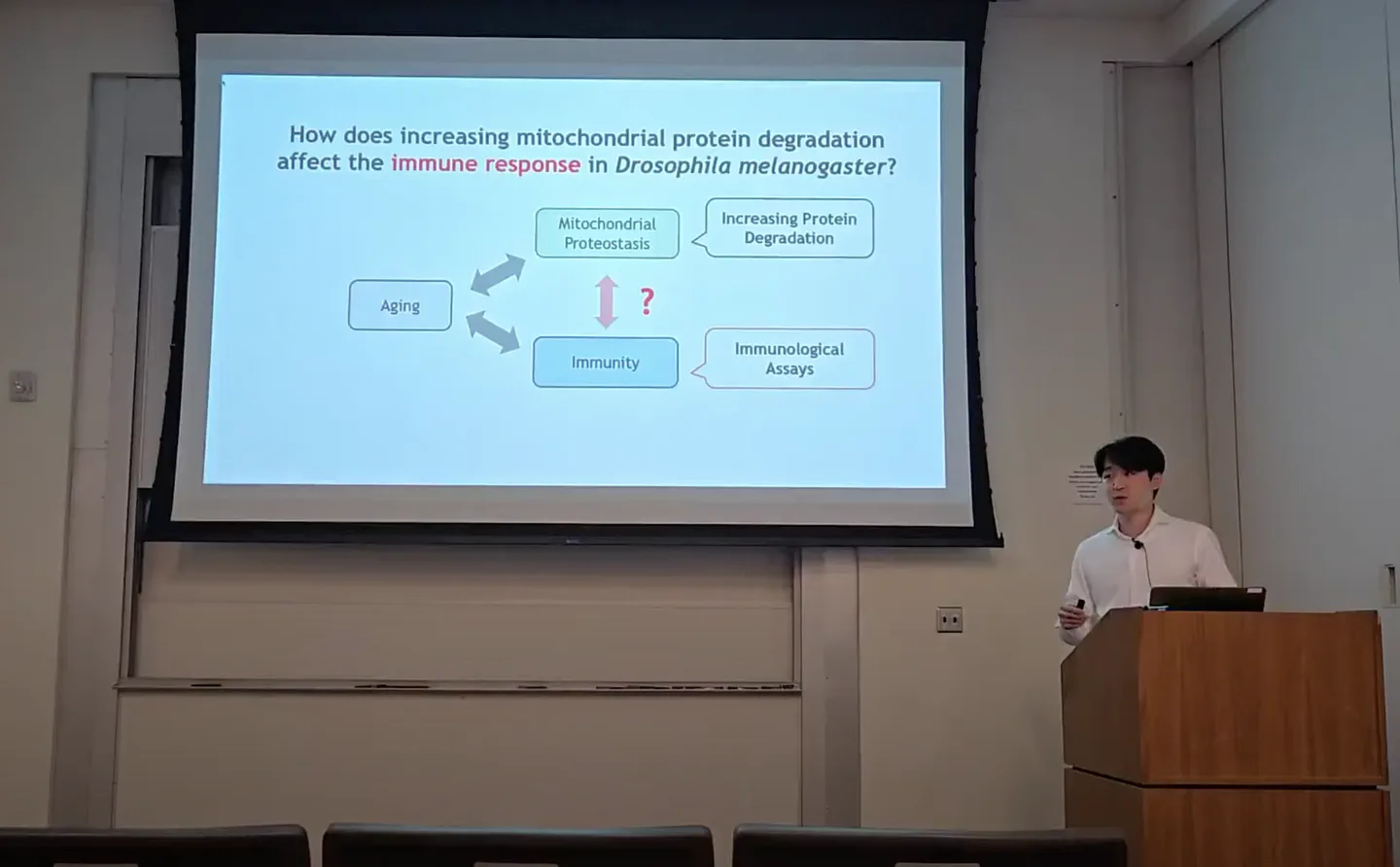
Does boosting mitochondrial protein quality control strengthen the fly’s innate immune response?
What I did
- Proposed and led an independent senior-thesis project
- Built infection, survival, bacterial-load and antimicrobial-peptide assays
- Tested flies that overexpress the mitochondrial protease ClpXP
What I found
Infection triggered a strong immune response, but boosting ClpXP did not change survival, bacterial clearance or antimicrobial-peptide levels.
Methods GeneSwitch overexpression · Bacterial infection assays · RT-qPCR
Organism Drosophila melanogaster
Recognition Mindlin Prize for Best Senior Thesis Research

Background
Aging and immunity are closely linked: as organisms age, immune function declines. Keeping mitochondrial proteins in good shape (mitochondrial proteostasis) is associated with longer lifespan and slower aging — but whether it also supports immunity was unknown.
What I did
I brought an immunology project into a lab focused on the genetics of aging, from the initial idea through experiments and write-up. Using flies that overexpress the mitochondrial protease ClpXP (switched on with the RU486-inducible GeneSwitch system), I set up and validated infection, survival, bacterial-load and antimicrobial-peptide (AMP) assays with the bacterium Serratia marcescens Db11.
What I found
Infection reliably activated the immune response, but ClpXP overexpression did not significantly change survival, bacterial clearance, or AMP expression. Better mitochondrial protein quality control alone does not seem to boost resistance to acute infection — though it may still support resilience through other aging- and stress-related pathways.
Click to open the PDF.