- Immunology
- Global health
Natural Killer Cells and Naturally Acquired Immunity to Malaria
Jagannathan Lab · Stanford University School of Medicine · Stanford, CA, USA · Jun 2026 – Present
Graduate Researcher, Doctoral Dissertation Research · Dr. Prasanna Jagannathan, Division of Infectious Diseases, Department of Medicine
Question
How does repeated malaria exposure shape natural killer cells in children — and does that help or limit immunity and vaccine responses?
What I did
- Studying the receptors NK cells carry in samples from Ugandan children
- Combining high-parameter flow cytometry with functional NK cell assays
What I found
Ongoing — the project is at an early stage; this page will grow with the work.
Methods Flow cytometry · NK cell functional assays · Human cohort samples
Organism Human cohorts (Uganda)
Background
Malaria, caused mainly by Plasmodium falciparum, killed an estimated 610,000 people in 2024, most of them children under five. Children who grow up where malaria is common gradually become protected from symptomatic disease after repeated infections, but what drives this naturally acquired immunity is still poorly understood.
The question
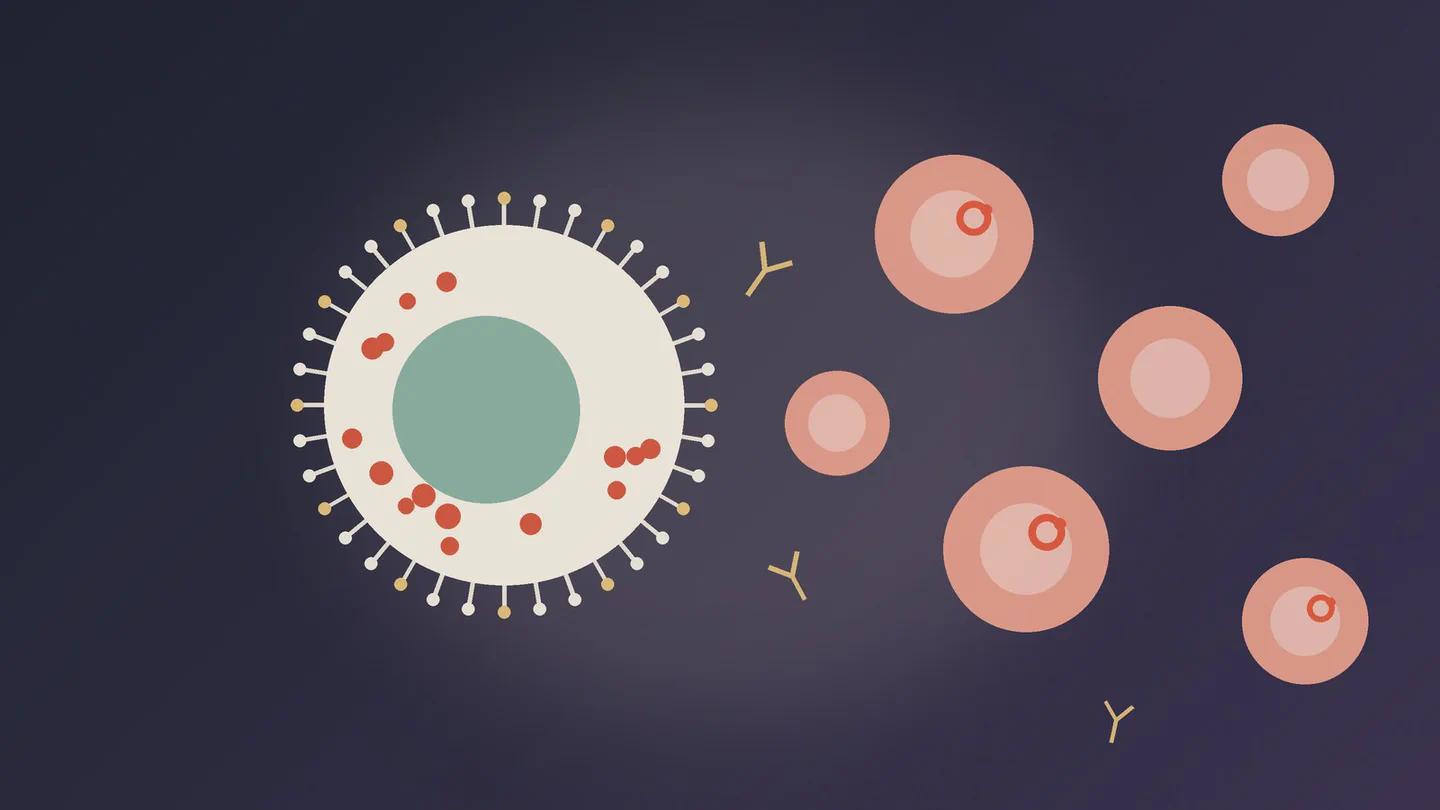
Natural killer (NK) cells can respond to infected red blood cells directly, and they can kill antibody-coated targets (antibody-dependent cellular cytotoxicity, ADCC). Our lab has found that repeated malaria exposure in Ugandan children expands a highly cytotoxic, “adaptive-like” group of NK cells linked to protection. At the same time, the parasite displays proteins that engage NK cell receptors — some switch NK cells on, others hold them back. I am asking how the receptors on a child’s NK cells shape:
- recognition of infected red blood cells,
- how NK cell immunity develops in infancy, including under malaria chemoprevention, and
- the quality of antibody responses to malaria vaccines.
Approach
I work with samples from cohort studies of children in Uganda, combining high-parameter flow cytometry with functional assays of NK cell activity.